You Won’t Believe What Georgetown, Guyana’s Hidden Zones Reveal
Georgetown, Guyana, isn’t just a capital city—it’s a gateway to unexpected experiences. From colonial architecture to vibrant local markets, its themed neighborhoods offer more than meets the eye. I explored the city’s most authentic zones, where culture, nature, and daily life blend seamlessly. If you're seeking real, off-the-beaten-path moments without the tourist crowds, this is your starting point. Let’s dive into the heart of a Caribbean capital that few truly know. This is a city where history hums through wooden lampposts, where the river breathes with the rhythm of cargo ships, and where faiths stand side by side in quiet harmony. Here, authenticity isn’t staged—it’s lived.
Colonial Core: Where History Walks the Streets
At the heart of Georgetown lies a remarkably preserved colonial district, a legacy of British rule that has withstood time, tropical humidity, and shifting tides of urban development. The city’s central grid, laid out in the early 19th century, remains largely unchanged, lined with painted wooden homes, verandas draped in bougainvillea, and stately public buildings raised on stilts to combat flooding. What makes this area extraordinary is not just its survival, but its recognition—Georgetown’s wooden architecture is among the few in the world built primarily from timber, and its historic core is currently on UNESCO’s Tentative List for World Heritage status.
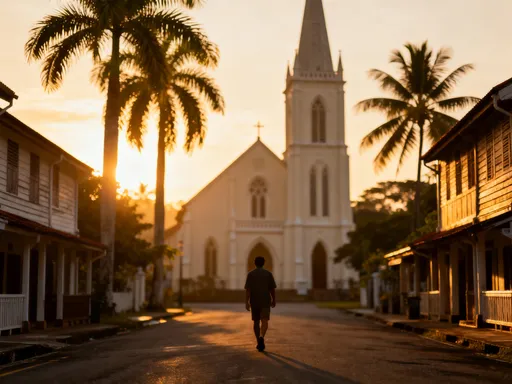
Walking through the Colonial Core at sunrise offers a rare intimacy with the city. The golden light filters through canopy trees, casting long shadows over cobblestone alleys and wrought-iron fences. St. George’s Cathedral, one of the tallest wooden churches in the world, rises with quiet majesty. Its pointed spire, crafted entirely from Greenheart wood—a durable tropical hardwood—reaches 43.6 meters into the sky. Inside, the air is cool and still, the scent of aged timber mingling with the faint echo of morning hymns. Visitors are welcome to attend services or simply sit in quiet reflection, a practice cherished by locals and newcomers alike.
Nearby, the Government House—residence of Guyana’s president—stands as a symbol of continuity. Originally built in 1834 as the home of the British Governor, it features wide verandas, louvered windows, and a grand central hall designed to capture breezes in the pre-air-conditioning era. Though the interior is not regularly open to the public, guided tours are occasionally offered during national heritage events, providing insight into the building’s role in shaping the nation’s governance. For those exploring on foot, early mornings are ideal, avoiding both the midday heat and the afternoon rains that sweep across the coast with predictable rhythm.
What sets this district apart is its lived-in character. These are not museum pieces behind velvet ropes but homes, offices, and institutions still in daily use. Children walk to school past 19th-century courthouses, and civil servants enter colonial-era ministries under the shade of silk-cotton trees. To experience the Colonial Core like a local is to walk slowly, greet neighbors, and appreciate the quiet dignity of a city that honors its past without being trapped by it.
The Waterfront: Georgetown’s Living Room
If the Colonial Core is Georgetown’s historical spine, the Waterfront is its social heart. Stretching along the eastern bank of the Demerara River, this broad, tree-lined promenade functions as the city’s open-air living room—a place where families stroll, couples chat on benches, and joggers move to the rhythm of the tide. Unlike manicured tourist esplanades in other capitals, the Georgetown Waterfront feels organic, unpolished, and deeply authentic. Its charm lies not in grandeur but in its role as a daily gathering space for people from all walks of life.
The river itself is a constant presence. Wide and brown from silt, it carries oceangoing vessels toward the Port of Georgetown, one of the busiest in the Caribbean. Watching these ships glide silently past, their horns echoing in the distance, offers a subtle reminder of Guyana’s position as a gateway between the Atlantic and the interior rainforests. At dusk, the scene transforms. Street vendors appear with carts of fresh coconuts, their tops chopped open with machetes to reveal the sweet, cooling water inside. Locals gather to sip slowly, feet up, as the sun dips below the horizon, painting the sky in soft pinks and oranges.
For visitors, the best time to visit is late afternoon to early evening, when the heat begins to fade and a gentle breeze rolls in from the Atlantic. The paved walkway is wide enough for comfortable strolling, and benches are spaced regularly, inviting rest and conversation. Children fly kites near the monument to Cuffy, an 18th-century enslaved leader who led a major uprising—his statue stands tall, a quiet tribute to resistance and resilience. Cyclists and skateboarders share the path with walkers, creating a relaxed, inclusive atmosphere.
The Waterfront is also a place of quiet reflection. Unlike crowded tourist hotspots elsewhere, it does not demand attention. Instead, it offers space—to breathe, to listen, to observe. It’s common to see elderly men playing dominoes under the trees, their hands moving with practiced ease, or young women reading books beneath the shade of a frangipani. There are no admission fees, no strict rules, no commercial distractions. This is public space at its most democratic, a rare urban sanctuary where the simple act of being present feels like a gift.
Stabroek Market: The Pulse of Local Commerce
No visit to Georgetown is complete without stepping into Stabroek Market, the city’s most iconic marketplace and a living testament to Guyana’s vibrant economy. Housed in a cast-iron structure imported from Scotland in the 1880s, the market is a sensory explosion—colors flash from pyramids of tropical fruit, the scent of fresh fish and spices fills the air, and the hum of bargaining rises above the clatter of footsteps on metal grates. More than just a shopping destination, Stabroek Market is a microcosm of Guyanese life, where farmers, artisans, and traders from across the country converge to sell their wares.
The market’s central hall, dominated by a towering clock tower, is divided into sections: produce on the ground floor, clothing and household goods above, and food stalls tucked into every available corner. Vendors call out in warm Creole, offering everything from golden pineapples and scarlet peppers to handwoven baskets and embroidered blouses. What makes the experience unique is the diversity of goods—plantains from the Rupununi, cassava bread from indigenous villages, and chilies grown in the Berbice region—all under one roof. For travelers, it’s an opportunity to taste authentic flavors, support local entrepreneurs, and witness the rhythm of daily commerce in real time.
Navigating the market requires awareness and respect. Crowds can be dense, especially in the mornings, and the metal structure traps heat, making hydration essential. Visitors are advised to carry small bills, as change can be scarce, and to keep belongings secure. While theft is rare, pickpocketing has been reported in high-traffic areas. The best approach is to move with purpose, smile often, and engage vendors with courtesy. Many appreciate genuine interest in their products and are happy to explain how cassareep—a key ingredient in Guyana’s national dish, pepperpot—is made from boiled cassava juice.
Beyond shopping, Stabroek Market is a place of connection. It’s where news is exchanged, recipes are shared, and friendships are renewed. For decades, it has survived floods, fires, and economic shifts, emerging each time as a symbol of resilience. To walk its aisles is to witness the heartbeat of Georgetown—not polished, not performative, but real, raw, and deeply human.
Religious Harmony in Plain Sight
One of Georgetown’s most remarkable yet understated qualities is its religious harmony. In a world where faith often divides, this city stands as a quiet model of coexistence. Within a single city block, it’s not uncommon to find a mosque, a Hindu temple, a Catholic cathedral, and a Protestant church standing side by side—each with its own spire, dome, or minaret, each respected and protected by the community at large. This balance is not enforced by law alone but sustained by generations of mutual respect, interwoven family ties, and a shared national identity that values pluralism.
The Queenstown Mosque, with its elegant white domes and slender minaret, shares a street with the Sacred Heart Cathedral, its red-brick façade glowing in the afternoon sun. Nearby, the Seetaram Hindu Temple, established in 1855, hosts daily aarti ceremonies, its bells ringing out over the neighborhood. During religious festivals—Eid, Diwali, Easter, or Phagwah—celebrations spill into the streets, and people of all backgrounds often participate, sharing meals and greetings. It’s common to see Muslim neighbors offering sweets during Diwali or Hindu friends attending Christmas church services, a quiet testament to the city’s inclusive spirit.
This harmony is reflected in public life. National holidays include Islamic, Hindu, Christian, and indigenous observances, and schools often close for multiple religious festivals. The government maintains a policy of non-interference in religious affairs, while actively promoting interfaith dialogue through community events and educational programs. Mosques and temples frequently host open houses, inviting outsiders to learn about their traditions, and many religious leaders collaborate on social initiatives, from feeding the hungry to supporting youth programs.
For travelers, this peaceful coexistence offers a rare opportunity to witness faith in action—not as a source of conflict, but as a foundation for community. Visitors are generally welcome to observe services, provided they dress modestly and follow local customs. Removing shoes before entering a temple, covering shoulders at a mosque, or sitting quietly during a church service are small gestures that go a long way. In Georgetown, religion is not a barrier but a bridge—one that connects people across differences and strengthens the fabric of daily life.
Green Spaces: Breathing Room in the Tropics
In a city where heat and humidity can feel overwhelming, Georgetown’s green spaces offer essential relief—and much more. The Botanical Gardens, established in 1895, is the crown jewel of the city’s parks, a 3,000-square-meter oasis of shade, fragrance, and bird song. Laid out in the Victorian style, it features winding paths, ornamental ponds, and a central bandstand where military bands once played on Sunday afternoons. Today, it remains a beloved retreat for families, couples, and solo visitors seeking peace amid the urban bustle.
The Gardens are home to a rich variety of native and exotic flora. Towering royal palms line the main avenue, while orchids bloom in shaded pavilions and water lilies float on quiet lagoons. One of the most famous residents is the Victoria regia, a giant water lily with leaves large enough to support a small child—first discovered in Guyana’s rivers and named after Queen Victoria. Informational plaques, though weathered, provide basic details about plant species, and local guides occasionally offer informal tours, sharing stories about medicinal uses of certain herbs or the cultural significance of the flamboyant tree, whose red blossoms symbolize passion and vitality.
Birdwatching is a quiet delight here. The Gardens attract species like the Guianan trogon, the black-faced grosbeak, and the colorful bananaquit, flitting among the branches. Early mornings are ideal, when the air is cool and birds are most active. Photographers and nature lovers often linger near the lotus pond, where kingfishers dive for small fish and dragonflies hover above the surface. For children, there’s a small playground and open lawns for running and games, making it a true family destination.
But the Botanical Gardens is more than a scenic escape—it’s a living classroom and a symbol of environmental stewardship. Managed by the National Trust of Guyana, it plays a role in conservation and education, hosting school groups and community workshops on tree planting and sustainable gardening. Other green spaces, like the smaller Hadfield Park and the seaside promenade at Liliendaal, offer similar benefits, proving that even in a compact capital, nature is not an afterthought but a vital part of urban life.
Cultural Corners: Neighborhoods With a Story
Georgetown’s identity is not monolithic—it is shaped by distinct neighborhoods, each with its own history, rhythm, and cultural flavor. Areas like Kitty, Thomas Lands, and Lodge Road reflect the city’s complex heritage, where Afro-Guyanese, Indo-Guyanese, and mixed-heritage communities have built lives side by side. These neighborhoods are not tourist attractions in the traditional sense, but they offer some of the most authentic experiences in the city—places where music spills from open windows, where the scent of curry and roti fills the air, and where generations have lived in the same homes.
Kitty, just east of the city center, is known for its strong Indo-Guyanese roots. Here, homes often feature colorful gates, potted hibiscus, and small altars near doorways. The area comes alive during Phagwah, when streets fill with music, dancing, and the joyful throwing of colored powder. Local bakeries sell doubles—a popular street food made with fried flatbread and seasoned chickpeas—and sweet shops offer mithai, traditional Indian sweets. Walking through Kitty, one hears a blend of English, Bhojpuri, and Creole, a linguistic tapestry that reflects the neighborhood’s layered identity.
Thomas Lands, developed in the mid-20th century to house civil servants, has evolved into a diverse, middle-class enclave. Tree-lined streets and modest bungalows give it a residential charm, while corner shops and roadside grills offer daily sustenance. It’s common to hear soca music on weekends, or to see families gathered on porches, sharing stories over cups of bay leaf tea. The area also hosts small cultural festivals, where steelpan bands perform alongside chutney musicians, symbolizing the blending of Afro- and Indo-Caribbean traditions.
For travelers, exploring these neighborhoods means moving beyond sightseeing into genuine cultural exchange. Simple acts—smiling at a neighbor, asking about a dish, or attending a local event—can open doors to meaningful connection. Homestays and community-led walking tours are emerging, offering deeper insight into daily life. These are not curated performances but real moments in real homes, where hospitality is offered freely and stories are shared without pretense.
Getting Around: Smart Moves in a Compact Capital
Georgetown is a city best explored at a human pace. Though small in size—just 30 square kilometers—its streets are best navigated with a mix of walking, local transport, and occasional taxis. The central areas, including the Colonial Core, the Waterfront, and Stabroek Market, are within easy walking distance, connected by shaded sidewalks and crosswalks. However, the tropical climate demands preparation: lightweight clothing, a wide-brimmed hat, and a reusable water bottle are essential. Midday walks are possible but best reserved for shorter stretches, as temperatures often exceed 32°C with high humidity.
For longer distances, minibuses are the most common form of public transport. These privately operated vans follow fixed routes and are inexpensive—typically less than two US dollars per ride. They are not always marked clearly, so asking a local for the correct stop is advisable. While they can be crowded, they offer an authentic glimpse into daily life, with drivers who often know their regular passengers by name. Taxis are widely available, especially near hotels and markets, and most now use meters or agreed-upon fares. It’s wise to confirm the price before starting a journey, and to use licensed vehicles when possible.
Bicycle rentals are a growing option, particularly for visitors staying several days. The flat terrain and short distances make cycling practical, and some guesthouses and tour operators now offer guided bike tours of the city’s highlights. Safety is generally good in daylight hours, though riders should remain alert at intersections and avoid cycling during heavy rain, when streets can flood quickly. For those with limited mobility, private car services can be arranged through hotels, providing a comfortable alternative.
The key to moving wisely in Georgetown is flexibility. Schedules are often fluid, and delays—especially during rainy season—are common. Rather than rushing, travelers are encouraged to embrace the city’s slower rhythm. Waiting for a minibus can become a conversation with a local vendor; a flooded street can lead to an unexpected detour through a quiet neighborhood. In Georgetown, the journey is not separate from the destination—it is part of the experience.
Georgetown isn’t flashy, but its quiet charm lies in its realness. Each themed zone offers a piece of a larger puzzle—a city that thrives on authenticity, diversity, and resilience. By exploring these areas with curiosity and respect, travelers don’t just see Guyana’s capital—they feel it. The real journey begins not with grand sights, but with genuine connections in everyday places. Whether standing beneath the wooden spire of a 19th-century cathedral, sipping coconut water on the Waterfront at sunset, or sharing a smile with a vendor in Stabroek Market, the moments that linger are the unscripted ones. Georgetown does not perform for visitors. It simply lives—and in that living, it invites you to do the same.