Rome’s Timeless Stones: A Slow Wander Through Eternal Architecture
Walking through Rome feels like flipping through the pages of a living history book. Every corner whispers stories, not just of emperors and popes, but of stone carved by time, light, and human hands. I didn’t rush—I wandered. And in that slowness, the city’s architectural soul revealed itself: layers of marble, sunlight on ancient columns, and quiet courtyards where centuries breathe together. This isn’t about ticking off landmarks. It’s about feeling how architecture shapes memory, mood, and meaning—one quiet step at a time.
The Rhythm of Slow Travel in Rome
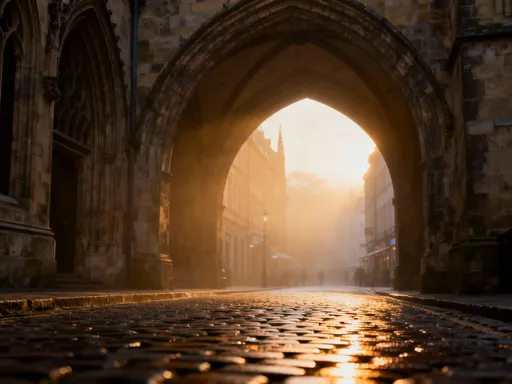
Rome is not a city to be conquered in a weekend itinerary. Its true character unfolds not in hurried glances, but in lingering pauses—moments when sunlight shifts across a weathered wall, or a breeze stirs the ivy clinging to a forgotten arch. The philosophy of slow travel finds its natural home here, where time itself seems layered into the very fabric of the streets. Unlike the checklist-driven tourist who measures success by how many sites are visited, the slow traveler measures depth over distance. They walk without GPS urgency, allowing intuition and curiosity to guide each turn. This approach transforms sightseeing into an act of presence, where architecture is not just observed, but experienced through the senses.
In neighborhoods like Trastevere and Monti, the rhythm of daily life still pulses beneath the weight of history. Cobblestone alleys twist unexpectedly, revealing sun-dappled piazzas where locals sip espresso at outdoor tables. These districts were never designed for efficiency; they evolved organically over centuries, shaped by need, faith, and community. To walk through them slowly is to understand how urban space can foster intimacy. The worn steps of a 16th-century palazzo, the faded frescoes on a courtyard wall, the scent of rosemary from a window box—all speak of a continuity between past and present. By resisting the urge to rush, travelers begin to notice details that would otherwise vanish in a blur: the way a Baroque doorway frames a glimpse of sky, or how a Renaissance balcony casts a delicate shadow at noon.
Slowness also allows one to witness the subtle choreography of light and shadow across Rome’s stone surfaces. In the early morning, the travertine façade of a church glows warm and golden; by midday, it stands crisp and bright; in the late afternoon, long shadows stretch across piazzas like fingers tracing history. These shifts are not merely aesthetic—they are part of the city’s architectural language. The slow traveler learns to read them, understanding that Rome’s beauty lies not only in its monuments but in the quiet interplay between form, light, and time. This mindful way of moving through the city fosters a deeper emotional connection, turning a visit into a personal dialogue with centuries of craftsmanship and memory.
From Ruins to Roofs: The Evolution of Roman Architecture
Rome’s skyline is a timeline written in stone. From the austere grandeur of Republican temples to the theatrical flourishes of Baroque churches, each architectural era left an indelible mark on the city’s identity. The evolution of Roman architecture reflects more than changing styles—it reveals shifts in power, belief, and human aspiration. At its core, Roman design has always balanced engineering brilliance with aesthetic harmony, creating structures meant to endure as both functional spaces and symbols of authority.
The classical foundations of Roman architecture are evident in the symmetry, proportion, and use of columns that define ancient sites like the Temple of Saturn in the Roman Forum. Drawing from Greek precedents, Roman builders refined the orders—Doric, Ionic, and Corinthian—adapting them to their own needs. The Corinthian column, with its ornate acanthus leaf capitals, became a favorite for imperial projects, symbolizing both refinement and dominance. Yet what truly set Roman architecture apart was its mastery of the arch, the vault, and the dome—innovations that allowed for larger, more ambitious buildings. The Colosseum stands as a monumental testament to this engineering prowess. Its tiered arcades, supported by robust piers and engaged columns, could hold over 50,000 spectators while maintaining structural integrity under immense pressure.
Perhaps the most enduring symbol of Roman architectural genius is the Pantheon. Completed in the 2nd century AD, its massive concrete dome remains the world’s largest unreinforced dome, a feat of engineering that continues to inspire architects today. The oculus at the top—a circular opening to the sky—creates a dynamic interplay of light that moves across the interior like a celestial clock. This deliberate use of light was not merely decorative; it reinforced the building’s sacred function, connecting the earthly realm with the divine. The Pantheon’s harmonious proportions, combining a perfect sphere within a cylinder, reflect a deep understanding of geometry and cosmic order.
Centuries later, during the Renaissance, architects revisited these classical ideals with renewed reverence. Figures like Donato Bramante and Michelangelo studied ancient ruins to revive symmetry, balance, and human-centered design. The dome of St. Peter’s Basilica, inspired by the Pantheon but even more ambitious in scale, became a new symbol of spiritual and artistic achievement. Then came the Baroque period, where emotion and drama took precedence. Architects like Gian Lorenzo Bernini and Francesco Borromini broke from rigid symmetry, embracing curves, movement, and theatrical lighting to evoke awe. Each era built upon the last, not erasing what came before, but engaging in a continuous architectural conversation across time.
Walking the Layers: A Day in the Centro Storico
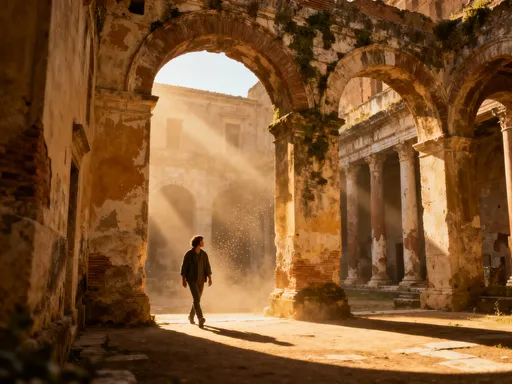
A single day spent wandering through Rome’s historic center is like peeling back the layers of a centuries-old manuscript. The journey might begin at the edge of the Roman Forum, where fragments of temples and basilicas rise from the earth like bones from antiquity. Here, the ancient city once pulsed with political life, commerce, and religious ritual. Now, it invites quiet contemplation. Walking among the ruins, one notices how modern pathways trace the lines of ancient roads, and how fragments of marble columns have been repurposed into retaining walls or benches. The past is not preserved behind glass—it is embedded in the present, visible in every step.
From the Forum, a slow ascent toward Capitoline Hill offers panoramic views of the city, with the Vittoriano monument standing in striking contrast to the surrounding classical ruins. Designed in the late 19th century, this grand white marble complex reflects the ambitions of a newly unified Italy, yet its placement among ancient sites sparks ongoing debate about harmony between old and new. Descending into the heart of the centro storico, the streets narrow, and the architectural tapestry grows richer. Along Via dei Fori Imperiali, remnants of Trajan’s Market—the ancient world’s first shopping complex—stand adjacent to later medieval buildings, their facades marked by centuries of weathering and repair.
As the path meanders toward Piazza Venezia and onward to Piazza Navona, the Baroque spirit emerges in full force. The transformation is palpable: where the Forum felt solemn and fragmented, Piazza Navona exudes theatrical vitality. Built on the site of an ancient Roman stadium, its elongated shape still echoes the racetrack’s original form. The piazza is anchored by Bernini’s Fountain of the Four Rivers, a masterpiece of sculptural drama. Water gushes from beneath a towering rock formation, surrounded by allegorical figures representing the Nile, Ganges, Danube, and Rio de la Plata. The effect is both naturalistic and symbolic, designed to inspire wonder in those who pause to look.
Sensory details define this kind of architectural journey. The coolness of stone under a shaded arcade, the rough texture of tufa blocks in a 1st-century wall, the sudden sound of water from a hidden font—all contribute to a deeper understanding of place. Even the air changes: thick with heat and dust in open squares, then cool and still within a cloistered courtyard. These experiences cannot be captured in photographs alone. They require presence, attention, and time. By moving slowly, the traveler begins to perceive not just individual buildings, but the urban fabric as a living, breathing entity—one shaped by conquest, faith, artistry, and daily life across millennia.
Baroque Drama and the Art of Illusion
If classical Rome celebrated order and reason, Baroque Rome embraced emotion, movement, and divine spectacle. Emerging in the 17th century as part of the Catholic Church’s Counter-Reformation, Baroque architecture was designed to captivate the faithful and reaffirm the power of the Church through sensory immersion. Architects like Gian Lorenzo Bernini and Francesco Borromini transformed Rome into a stage for spiritual theater, where light, form, and sculpture combined to create experiences of awe and transcendence.
St. Peter’s Square, designed by Bernini, is perhaps the most powerful expression of this vision. The vast elliptical piazza, embraced by two sweeping colonnades, evokes the arms of the Church welcoming the world. As visitors approach, the scale shifts dramatically—the dome of the basilica appears to hover in the distance, framed perfectly by the arcades. Bernini manipulated perspective and proportion to enhance this effect, making the space feel both monumental and intimate. At certain points, the four rows of columns align into a single line, creating a moment of visual harmony that feels almost miraculous. This deliberate use of illusion is central to Baroque design: architecture does not merely occupy space—it shapes perception.
Inside churches like Sant’Andrea al Quirinale and San Carlo alle Quattro Fontane, the drama intensifies. Borromini’s design for San Carlo, though small in footprint, is a whirlwind of concave and convex surfaces. The façade undulates like waves, drawing the eye upward toward a lantern dome bathed in golden light. Inside, the oval nave creates a sense of motion, as if the space itself is in spiritual ascent. The dome, adorned with intricate stucco work, appears to open into the heavens, dissolving the boundary between earthly and divine. These effects are not accidental—they are the result of meticulous calculation, where geometry serves devotion.
Light plays a crucial role in Baroque architecture, often directed through hidden windows or oculi to illuminate specific altars or sculptures at key moments of the day. In the Cornaro Chapel of Santa Maria della Vittoria, Bernini’s *Ecstasy of Saint Teresa* is bathed in golden light from a concealed source above, making the mystical vision appear almost real. To appreciate these details, one must move slowly, observing how shadows shift and highlights emerge over time. The hurried glance misses the intention; only sustained attention reveals the full narrative. In this way, Baroque Rome teaches a lesson in mindfulness: true beauty often lies not in the obvious, but in the carefully concealed, waiting to be discovered by those who take the time to look.
Hidden Courtyards and Forgotten Facades
Beyond the grand piazzas and famous monuments, Rome harbors quieter, more intimate spaces—hidden courtyards, silent cloisters, and unassuming church façades tucked between bakeries and bookshops. These lesser-known sites offer a different kind of architectural experience: one defined not by spectacle, but by stillness. They are sanctuaries of design, where proportion, light, and materiality speak without fanfare.
The Cloister of Bramante, nestled in the heart of the city near Piazza Farnese, is one such gem. Designed in the early 16th century, it exemplifies High Renaissance ideals of harmony and balance. A double row of slender Doric columns supports a graceful arcade, framing a central garden where silence reigns. The proportions are mathematically precise, creating a sense of calm that feels almost meditative. Unlike the surrounding bustle of traffic and conversation, this cloister operates on a different temporal rhythm—one aligned with contemplation rather than consumption. Few tourists find their way here, and those who do often sit quietly on the stone benches, absorbing the space as much as observing it.
Another hidden treasure is the courtyard of Palazzo Mattei, accessible through an unmarked doorway on a narrow street in the Jewish Ghetto. Once the private residence of a noble family, the courtyard is a masterpiece of Mannerist design. Columns of varying styles—some ancient, some newly carved—create a deliberate sense of eclecticism, reflecting the Renaissance fascination with antiquity. A spiral staircase winds upward with theatrical flair, while frescoed walls hint at lost opulence. Because it is not a major tourist site, the space retains an air of authenticity. One can stand in the center and feel the weight of centuries without the distraction of crowds or audio guides.
These spaces matter because they remind us that architecture is not only about grandeur. Some of the most moving designs are those meant for private reflection, daily ritual, or scholarly study. They were built for people who lived with them, not for visitors passing through. In their quietude, they offer a purer connection to the intentions of their creators. To seek out these hidden corners is to practice a form of architectural pilgrimage—one that values depth over visibility, and presence over performance.
Modern Rome and the Dialogue with the Past
Rome is not a museum frozen in time. It is a living city that continues to grow, adapt, and evolve. Yet unlike many modern metropolises, it does so with a profound awareness of its past. Contemporary architecture in Rome rarely seeks to dominate the skyline; instead, it often aims to listen, respond, and integrate. This dialogue between old and new is one of the city’s most compelling architectural narratives.
One of the clearest examples is the Ara Pacis Museum, designed by American architect Richard Meier and completed in 2006. Housing the ancient Altar of Peace, a 1st-century BC monument dedicated to the peace brought by Emperor Augustus, the building sparked controversy for its stark white modernism amid Rome’s warm stone palette. Yet over time, many have come to appreciate its role as a frame rather than a statement. The translucent marble walls filter natural light, allowing the altar to be viewed in changing conditions throughout the day. The design respects the artifact without imitating it, creating a space where antiquity and modernity coexist in tension and balance.
Even more remarkable are Rome’s new Metro stations, particularly Line C, which have become accidental archaeological museums. As engineers dug deep beneath the city, they uncovered layers of history—ancient roads, mosaics, and even entire workshops. Rather than conceal these finds, the transit authority incorporated them into the station designs. At the San Giovanni station, for instance, excavated ruins are displayed behind glass, illuminated like gallery pieces. Passengers descend not just into the subway, but through time itself. This integration of infrastructure and archaeology reflects a broader philosophy: progress need not erase the past, but can reveal it.
Elsewhere, restoration projects have revived neglected buildings with sensitivity and care. The rehabilitation of the Ex Dogana, a former customs house near Testaccio, transformed it into a cultural center that hosts exhibitions and performances while preserving its industrial character. These interventions show that modern Rome values continuity as much as innovation. The city’s architectural future does not lie in imitation or rejection, but in conversation—a respectful exchange between centuries, where each generation adds its voice without silencing those that came before.
How to See Like an Architect (Without Being One)
You don’t need a degree in architecture to appreciate Rome’s built environment. What you need is curiosity, patience, and a willingness to look closely. Developing an architect’s eye is less about technical knowledge and more about cultivating awareness—of materials, proportions, light, and the way spaces make you feel. With a few simple practices, any traveler can deepen their connection to the city’s architectural soul.
Begin with slow sketching. You don’t have to be an artist; even rough line drawings force you to observe details you might otherwise overlook. The curve of a cornice, the pattern of a cobblestone pavement, the way a column tapers toward the top—these become more vivid when rendered by hand. Similarly, keeping a photo journal focused on light changes can reveal how architecture transforms throughout the day. Take pictures of the same façade at dawn, noon, and dusk. You’ll be amazed at how different a building can appear under varying conditions.
Tactile observation is another powerful tool. Whenever permitted, touch the surfaces around you—the cool smoothness of marble, the roughness of volcanic tufa, the warmth of sun-baked brick. These materials tell stories of origin, craft, and time. Notice how different stones weather differently, or how restoration work contrasts with original masonry. Also, pay attention to urban flow: how streets converge, how doorways are positioned, how courtyards create pockets of calm. These are not accidents, but the result of centuries of thoughtful design.
Finally, consider using guided audio walks from trusted cultural institutions. Many offer narrated tours that explain architectural features without overwhelming the listener. These can enhance your understanding while still allowing room for personal reflection. The goal is not to memorize dates or styles, but to develop a felt sense of place. When you begin to notice how a doorway frames a view, or how a fountain’s sound alters the mood of a piazza, you’re seeing like an architect—not through expertise, but through presence.
Conclusion
Rome’s architecture isn’t just to be seen—it’s to be felt over time. By slowing down, we don’t just visit history; we inhabit it. The city teaches us that beauty isn’t in speed, but in presence. Every stone, every arch, every shadow has a story that unfolds only to those who linger. In a world that often values efficiency over experience, Rome stands as a quiet rebellion—a place where the past is not buried, but walked upon, touched, and lived. Let the stones speak. Listen. And let your journey become part of Rome’s endless story.