What I Found in Battambang’s Forgotten Landmarks
You know that feeling when you stumble upon something no one told you about? That’s exactly what happened in Battambang, Cambodia. Far from the crowds of Siem Reap, I discovered colonial-era buildings, ancient pagodas, and a riverside charm that feels untouched. These landmarks aren’t just structures—they’re whispers of history, culture, and quiet resilience. Let me take you through the soul of a city most overlook, but none forget.
Arrival in Battambang: A City That Feels Like a Secret
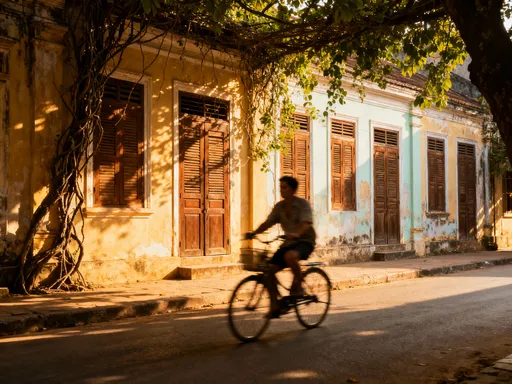
Battambang greets visitors with a hush, as if it has long been content in its own rhythm. The streets are lined with French colonial buildings, their shutters slightly ajar, their balconies draped in bougainvillea. The Sangker River meanders through the city like a quiet companion, reflecting the golden light of early morning and the soft glow of lanterns at dusk. Unlike the bustling energy of Phnom Penh or the tourist-thronged temples of Siem Reap, Battambang moves at a different pace—one measured in slow boat rides, unhurried conversations, and the gentle chime of bicycle bells.
What makes Battambang stand apart is its authenticity. There are no mass-market souvenir stalls crowding the sidewalks, no neon-lit bars competing for attention. Instead, life unfolds naturally: children kick footballs in open squares, elders sip strong Cambodian coffee at sidewalk tables, and vendors sell mangoes and sticky rice from wooden carts. This is a city that hasn’t been reshaped for tourism—it has simply allowed visitors to step into its world. And in doing so, it offers a rare kind of travel experience: one rooted in presence rather than performance.
The city’s history is woven into its streets. Once a provincial capital under French colonial rule, Battambang flourished as a center of agriculture and trade. Its wide avenues and stately buildings were designed for comfort and order. But like much of Cambodia, it endured decades of upheaval, particularly during the Khmer Rouge era, when the population was forcibly evacuated and the city fell silent. Today, Battambang is in a quiet phase of recovery—rebuilding not just infrastructure, but identity. The landmarks that remain are not just relics; they are markers of survival, resilience, and a community’s determination to remember.
Phnom Sampov: The Hill That Tells a Thousand Stories
Rising gently above the flat expanse of rice fields, Phnom Sampov is more than a scenic viewpoint—it is a living archive of Battambang’s spiritual and historical layers. The name translates to “Pot Mountain,” said to reference its rounded shape, but locals will tell you it carries stories far deeper than its silhouette. A winding path leads upward, flanked by shrines, prayer flags, and the occasional monk in saffron robes. At the summit, the view stretches across endless green fields, the city in the distance, and the winding ribbon of the Sangker River.
At the heart of Phnom Sampov is a cave pagoda, where centuries of devotion have left their mark. Inside, the air is cool and still, illuminated by flickering candles and the soft glow of golden Buddha statues. Visitors kneel to offer lotus blossoms and light incense, their prayers rising like smoke into the limestone chambers. This is not a museum piece; it is an active place of worship, where generations of families come to seek peace, give thanks, or mark important life moments. The presence of resident monks adds to the sense of continuity—these are not caretakers, but stewards of a living tradition.
But perhaps the most unforgettable experience at Phnom Sampov comes at dusk. As the sun dips below the horizon, thousands of bats emerge from a nearby cave, spiraling into the sky in a swirling, living cloud. This nightly exodus is both a natural wonder and a local legend—some say the bats are the spirits of those lost during turbulent times, finally finding release each evening. Whether one believes the story or not, the sight is mesmerizing: a river of wings flowing into the twilight, a reminder that nature and memory are deeply intertwined here. It is not staged for tourists; it simply happens, as it has for generations.
The Old Quarter: Where Time Stands Still
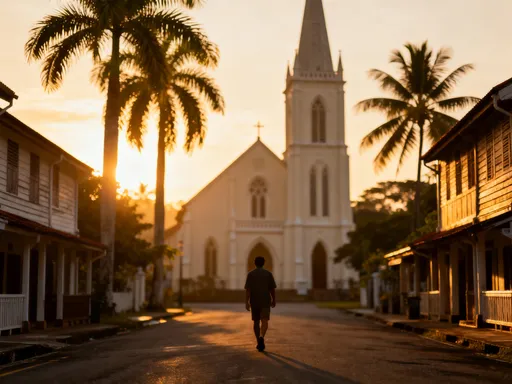
Walking along Riverfront Road in Battambang’s Old Quarter feels like stepping into a sepia photograph. The buildings here—once homes, shops, and administrative offices of the French colonial era—still stand with quiet dignity. Their pastel-colored facades, peeling slightly with age, reveal intricate woodwork, shuttered windows, and wrought-iron railings. Balconies overlook the river, where fishing boats drift by and children leap from wooden piers into the water below. There is no rush, no loud music, no pushy vendors—just the soft creak of ceiling fans and the occasional call to prayer from a nearby pagoda.
What makes this area remarkable is not just its preservation, but its balance. Unlike some heritage districts that become frozen in time or over-commercialized, Battambang’s Old Quarter remains lived-in. Families occupy upper floors, artists run small studios in ground-level spaces, and cafes serve strong coffee in repurposed colonial homes. Restoration efforts have been thoughtful—repairing roofs and reinforcing foundations without erasing the marks of time. There is a respect for authenticity here, a recognition that beauty lies not in perfection, but in history.
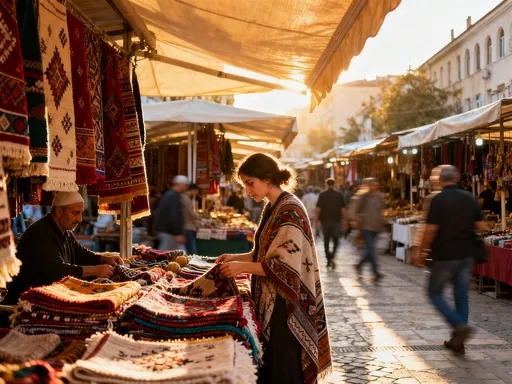
One of the most striking features is the use of shophouses—narrow buildings with commercial spaces on the ground floor and living quarters above. These structures, common in Southeast Asia, reflect a way of life where work and home are intertwined. Today, some sell handmade crafts, others offer traditional Khmer meals, and a few have been converted into boutique guesthouses. The key difference from more tourist-heavy areas is the absence of mass production. There are no plastic souvenirs or generic t-shirts. Instead, you’ll find handwoven textiles, locally made ceramics, and paintings by Cambodian artists—each item carrying a story, a connection to the place and its people.
Wat Ek Phnom: Ruins Wrapped in Mystery and Nature
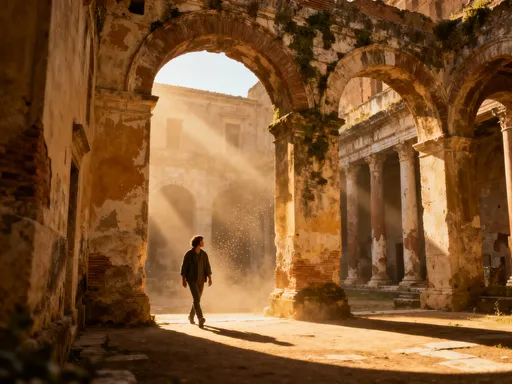
Just a short ride from the city center, Wat Ek Phnom feels like a discovery waiting to be made. Built in the 11th century during the height of the Angkorian Empire, this temple complex was once a center of religious and scholarly life. Today, it lies partially reclaimed by nature—towering trees grow through collapsed walls, roots cradle ancient stone carvings, and silence settles like a veil. Unlike the meticulously restored temples of Angkor Wat, Wat Ek Phnom has not been polished for mass tourism. Its beauty lies in its imperfection, in the way time and the jungle have shaped it into something both solemn and serene.
Walking among the ruins, one notices the intricate details that have survived centuries of weathering. Bas-reliefs depict scenes from Hindu epics, though many are now softened by moss and erosion. The central sanctuary, though roofless, still commands reverence. Local visitors sit in quiet contemplation, some lighting incense, others simply closing their eyes in meditation. It is clear that this is not just a historical site—it is still a place of spiritual significance, where the past and present coexist in harmony.
The emotional contrast with Angkor Wat is striking. While Angkor inspires awe with its scale and grandeur, Wat Ek Phnom evokes a different kind of feeling—intimacy, melancholy, and a deep sense of time’s passage. There are no crowds, no guided tours shouting through megaphones, no long lines to enter. Instead, there is space to breathe, to observe, to reflect. A single monk might pass by, his footsteps muffled by the grass, or a family might leave offerings at a small shrine tucked between the stones. This is history not as spectacle, but as quiet witness.
The Bamboo Train: A Ride Through History and Innovation
No visit to Battambang is complete without the bamboo train—a rickety, open-air cart powered by a small motor, gliding along a narrow-gauge railway through rice fields and rural villages. At first glance, it might seem like a tourist gimmick, but its origins are deeply rooted in necessity and resilience. After the Khmer Rouge era, when infrastructure was destroyed and transportation was scarce, locals devised this simple yet ingenious solution: a lightweight platform made of bamboo and metal, capable of moving people and goods along abandoned rail lines. Over time, it evolved into a cultural symbol—and now, a unique travel experience.
The ride itself is exhilarating in its simplicity. The train moves at a modest speed, allowing passengers to take in the unfolding landscape—the endless green of rice paddies, water buffalo wading in shallow ponds, children waving from dirt roads. The rhythmic clatter of the wheels on the tracks, the breeze on your face, the smell of damp earth—all combine to create a sensory journey unlike any other. At certain points, the train stops so visitors can take photos or speak with local farmers, creating moments of genuine connection.
What makes the bamboo train meaningful is not just the ride, but what it represents. It is a testament to Cambodian ingenuity—the ability to create solutions from scarcity, to adapt and rebuild. Today, while it serves as a tourist attraction, it is also a source of income for local operators, many of whom are former farmers or survivors of the conflict era. Riding the train is not just a novelty; it is a way of honoring a community’s resourcefulness and quiet strength. And when two trains meet on the single track, the smaller one is lifted aside by hand—a literal and symbolic gesture of cooperation and humility.
Local Life Around the Landmarks: People and Places That Bring History to Life
The true heart of Battambang is not found in its landmarks alone, but in the people who live alongside them. In the morning, the local market buzzes with activity—vendors arrange pyramids of ripe papayas, baskets of kaffir limes, and trays of grilled fish. Nearby, a woman fries banh chao, the Cambodian version of a crepe, its golden edges crisping over an open flame. These daily rituals are not performed for an audience; they are the fabric of life, continuing as they have for generations.
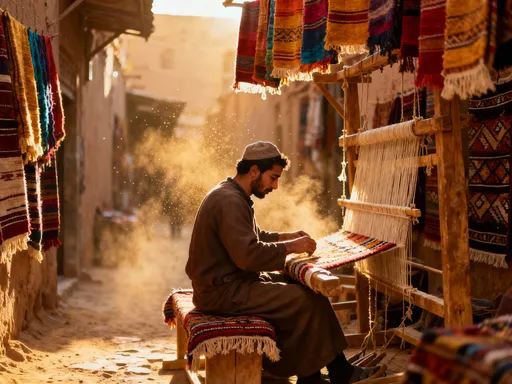
Artisans play a vital role in preserving culture. In small workshops, silk weavers use traditional techniques to create intricate patterns, each motif carrying symbolic meaning. Potters shape clay on foot-powered wheels, crafting bowls and vases that will be used in homes or sold at local markets. Some of these craftspeople welcome visitors to observe or even try their hand at weaving or pottery—a rare opportunity to engage with heritage in a meaningful way. These interactions are not staged performances; they are invitations to witness skill, patience, and pride.
Respectful tourism is essential here. This is not a place for intrusive photography or loud behavior. The best approach is quiet observation, polite curiosity, and a willingness to listen. When visiting pagodas or homes near historical sites, it is customary to remove shoes, dress modestly, and speak softly. These small gestures go a long way in building trust and showing appreciation. And when shared moments do occur—a smile from an elder, a wave from a child—they feel genuine, unscripted, and deeply human.
Why Battambang’s Landmarks Matter—And Why You Should Visit
Battambang’s forgotten landmarks offer more than scenic views or photo opportunities—they invite a deeper kind of travel. In a world where many destinations feel increasingly homogenized, Battambang remains refreshingly real. Its value lies not in grand monuments or luxury resorts, but in authenticity, connection, and the quiet dignity of everyday life. To visit is to step outside the ordinary, to slow down, and to listen—to the wind through the trees, to the chants in a pagoda, to the stories carried in weathered stone and handmade cloth.
For those planning a visit, timing matters. The best months to travel are November through February, when the weather is cooler and the skies are clear. Battambang is accessible by bus or minivan from Siem Reap or Phnom Penh, with journey times ranging from five to seven hours. Once there, the city is walkable, though bicycles and tuk-tuks offer convenient ways to explore further. Local guides, many of whom are trained through community-based tourism initiatives, can provide invaluable context and help navigate cultural nuances.
Photography should be done with care. Always ask permission before taking pictures of people, especially in religious or private settings. The goal is not to capture the perfect shot, but to honor the moment. And when choosing where to eat or shop, prioritize locally owned businesses—whether it’s a family-run noodle stall or a cooperative selling handwoven scarves. These choices support the community and ensure that tourism benefits those who call Battambang home.
In the end, Battambang is not just a destination—it is a quiet revelation. It reminds us that the most meaningful journeys are not always the loudest or most advertised. Sometimes, the places that stay with us longest are the ones we never knew to look for. They are the ones that speak in whispers, not shouts; that reveal themselves slowly, not all at once. To visit Battambang is to rediscover the joy of discovery itself—to travel not just to see, but to feel, to understand, and to remember. And perhaps, in doing so, to carry a little of its quiet strength with us when we return home.