Montreal’s Most Instagrammable Views That Took My Breath Away
You know that feeling when a city surprises you? Montreal did exactly that. I went for the food and culture, but stayed for the views—each one more stunning than the last. From hidden rooftops to quiet riverside spots, the city offers picture-perfect moments at every turn. This isn’t just about taking photos; it’s about experiencing beauty in motion. These are the places where scenery meets soul. With its seamless blend of European charm and North American energy, Montreal unfolds like a living canvas. Whether bathed in golden hour light or dusted with winter frost, the city reveals layers of visual poetry that linger long after you’ve left. What makes Montreal truly special is how accessible these moments are—not locked behind admission gates or tourist traps, but woven into daily life.
First Glimpse: Arrival in Montreal – A City That Feels Alive
The first thing you notice about Montreal is its rhythm. It doesn’t shout; it hums. As the train pulls into Central Station or the plane descends through low-hanging clouds, the city reveals itself in fragments: red-brick townhouses climbing gentle slopes, church spires piercing the skyline, and the broad ribbon of the St. Lawrence River glinting under changing light. There’s a warmth to Montreal’s urban fabric, a sense that history and modernity aren’t at odds but in conversation. This balance sets the tone for the visual journey ahead. Unlike cities that feel either overly polished or worn down, Montreal carries itself with effortless grace—a place where graffiti murals bloom beside centuries-old stone walls, and sleek glass towers reflect the pastel facades of 19th-century buildings.
Walking out of the station, the energy shifts. The air carries a mix of freshly baked bagels, coffee from corner cafés, and the faint metallic scent of the subway grates below. Streets widen and narrow unpredictably, inviting exploration. You might catch a street performer’s melody drifting from an underground passage or see a burst of color from a mural wrapping an entire block. The city doesn’t just look alive—it feels responsive, as if it adjusts its mood to match yours. For a photographer or even a casual observer with a smartphone, this dynamism is gold. Every intersection holds the potential for a frame-worthy moment: a cyclist pausing at a crosswalk, sunlight slicing through tree-lined avenues, or steam rising from a manhole cover on a crisp morning.
What makes Montreal’s arrival experience so visually compelling is its layered identity. It’s North American in scale and pace, yet European in aesthetic and intimacy. The sidewalks are wide enough for bustling commerce but narrow enough to maintain human scale. Buildings are tall, but rarely overwhelming. Even the signage—bilingual, colorful, sometimes hand-painted—adds to the visual texture. This harmony between form and function primes the eye for discovery. You begin to notice details: the curve of a wrought-iron balcony, the way ivy climbs a stone façade, or how shadows stretch across cobblestones in late afternoon. Montreal doesn’t demand your attention; it earns it, quietly and consistently, from the very first glance.
Mount Royal: The Heartbeat of the City’s View Game
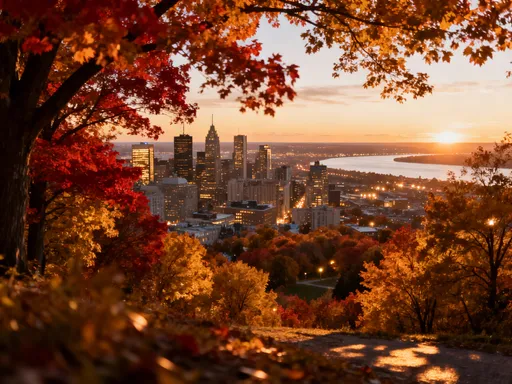
No visit to Montreal is complete without ascending Mount Royal, both literally and visually. This 200-meter-high urban mountain is not just a park—it’s the city’s visual anchor. Designed by Frederick Law Olmsted, the same visionary behind New York’s Central Park, Mount Royal offers the most comprehensive vantage point in all of Montreal. The climb itself—whether by foot, bike, or shuttle—feels like a pilgrimage toward clarity. As you rise above the tree line, the city unfolds beneath you in a sweeping panorama: skyscrapers framed by green canopies, the St. Lawrence stretching toward the horizon, and the cross atop the mountain standing sentinel over it all.
The summit rewards patience. The iconic stone chalet, though currently under renovation, remains a powerful silhouette against the sky. But it’s the view from the belvedere just west of the structure that stops breaths and fills camera rolls. Facing southwest, this overlook captures the downtown core in perfect perspective, especially at golden hour when sunlight bathes the glass towers in amber and rose tones. In the foreground, the treetops ripple in the wind, adding depth and movement to any composition. Photographers favor this spot for its unobstructed sightlines and natural framing—no fences, no clutter, just pure urban-natural synergy.
To make the most of this destination, timing is everything. Arriving just before sunset ensures optimal lighting and a gradual transition into twilight, when the city’s lights begin to flicker on like stars. Weekday evenings are noticeably less crowded than weekends, and early mornings offer a rare stillness—fog sometimes lingering in the valley, softening the skyline into a watercolor effect. For those with camera gear, a wide-angle lens (24mm or wider) captures the full scope, while a telephoto lens can isolate architectural details or distant river traffic. Tripods are allowed but should be used discreetly to avoid obstructing pathways. Most importantly, the experience isn’t just about the final shot. It’s about standing at the edge, feeling the breeze, and recognizing how small yet connected you are within this vast, breathing city.
Old Montreal: Where Every Corner Feels Like a Postcard
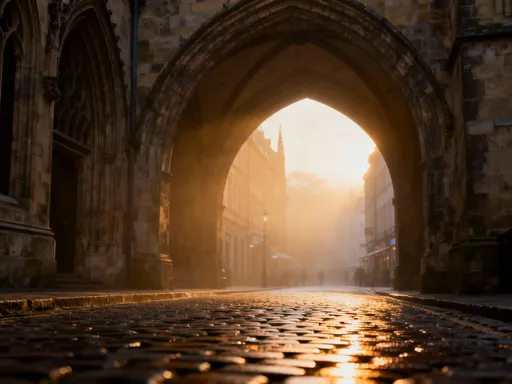
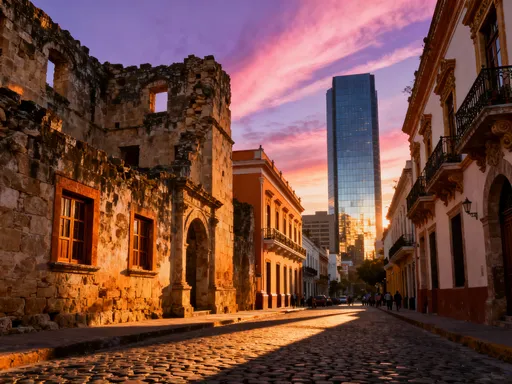
If Mount Royal offers the wide-angle view, Old Montreal provides the close-up—the intricate, textured details that make a city feel timeless. Stepping into Vieux-Montréal is like entering a living museum, where 17th- and 18th-century architecture coexists with contemporary life. The cobblestone streets, worn smooth by centuries of footsteps and carriage wheels, glisten after rain, creating perfect reflections of gas-lit lanterns and arched passageways. Every building tells a story, from the fortified walls of the original settlement to the ornate façades of former merchant houses now housing boutiques and bistros.
Start at Place Jacques-Cartier, the heart of the district. By day, it buzzes with artists, performers, and café tables spilling onto the pavement. But for photography, the magic happens in the quiet hours—just after sunrise or late at night, when the crowds thin and the lighting turns cinematic. The surrounding buildings, with their warm stone tones and black iron railings, absorb and reflect light in ways that add depth and mood. A single streetlamp can become the focal point of an entire composition, casting long shadows and highlighting textures in the stone.
Wander west along Rue Saint-Paul, and the character shifts. Here, shuttered shops with wooden doors and vintage signage create a sense of nostalgia. Window displays blend antiques with modern art, and flower boxes overflow with seasonal blooms. This street is ideal for detail shots: a weathered door handle, a cat napping on a windowsill, or sunlight filtering through a lace curtain. The interplay of light and shadow is particularly striking in the late afternoon, when low-angle rays slice between buildings, illuminating one façade while leaving the next in cool shadow.
One cannot speak of Old Montreal without mentioning the Notre-Dame Basilica. While interior photography may be restricted at certain times, the exterior remains a masterpiece of Gothic Revival design. The twin towers, intricate stonework, and dramatic entrance invite wide shots, while the surrounding square offers framing opportunities with street life in the foreground. For a unique perspective, shoot from across the street at dusk, when the basilica is lit from below and contrasts with the deep blue sky. Even if you’re not religious, the emotional weight of the structure is palpable—its beauty is a form of reverence in itself.
The Lachine Canal: A Hidden Gem for Serene Urban Beauty
Just a short ride from downtown lies a different side of Montreal—one defined by water, greenery, and quiet reflection. The Lachine Canal, once a vital industrial waterway, has been transformed into a scenic corridor for walking, cycling, and contemplation. Stretching nearly 14 kilometers from the Old Port to Lake Saint-Louis, the canal offers a peaceful counterpoint to the city’s more famous landmarks. Its restored locks, stone bridges, and repurposed factories create a visual narrative of renewal, where rust and rebirth coexist.
One of the most photogenic stretches runs between Atwater Market and the Griffintown neighborhood. Here, the water is calm, often mirroring the sky and surrounding architecture with glass-like precision. Early morning is ideal, when mist hovers above the surface and kayakers glide silently through the frame. Benches along the path provide natural vantage points, and several footbridges—particularly the metal truss designs—offer elevated perspectives perfect for capturing motion and symmetry. A slow shutter speed can turn passing cyclists into streaks of color, adding dynamism to static compositions.
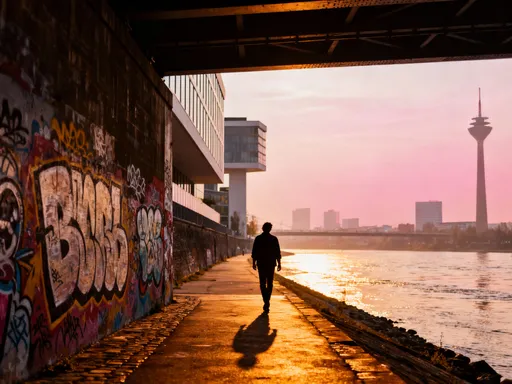
The industrial heritage of the area adds character. Red-brick warehouses with tall windows now house lofts and offices, their facades softened by ivy and climbing roses. Graffiti art appears sporadically, not as vandalism but as curated expression, blending seamlessly with the textures of time. At sunset, the western-facing stretches glow with warm light, and the reflections in the water can rival any city skyline in beauty. This is not a place for grand gestures but for subtle details: ripples from a dropped pebble, a heron standing still at the water’s edge, or the silhouette of a bridge against a pink-tinged sky.
Families picnic on grassy banks, dogs splash in shallow areas, and couples stroll hand-in-hand—all contributing to a sense of lived-in tranquility. Unlike more curated tourist spots, the Lachine Canal feels authentic, unposed. It’s the kind of place where you might sit for an hour without taking a single photo, simply absorbing the peace. And yet, when you do raise your camera, the images feel richer for the stillness that preceded them.
Rooftop Culture: Skyline Views with a Side of Style
Montreal’s rooftop scene is more than a trend—it’s a cultural ritual. As the city warms in late spring and summer, rooftops transform into open-air living rooms, where locals gather to sip craft cocktails, share small plates, and watch the day fade into night. But beyond the social appeal, these elevated spaces offer some of the most compelling urban views in the city. Unlike ground-level perspectives, rooftops provide a sense of detachment—of floating above the bustle while still being part of it.
Several well-known rooftops in the downtown and Plateau neighborhoods offer west-facing terraces, making them prime locations for sunset viewing. These spaces are designed with aesthetics in mind: clean lines, greenery-filled planters, and unobstructed sightlines toward the skyline. While specific venues change with the seasons, the experience remains consistent—elegant yet relaxed, stylish without pretension. Reservations are often recommended, especially on weekends, but arriving early on a weekday evening can secure a good spot without formality.
The visual payoff is extraordinary. As the sun dips below the horizon, the city undergoes a metamorphosis. Office windows blink on one by one, streetlights create golden trails along avenues, and the illuminated cross on Mount Royal becomes a distant beacon. Long-exposure shots can capture the flow of traffic as ribbons of light, while wide-angle views encompass both the immediate neighborhood and the broader skyline. Even without professional equipment, smartphone cameras perform well in this light, especially when stabilized on a table or railing.
What sets Montreal’s rooftops apart is their integration with the urban fabric. They don’t feel exclusive or isolated but like extensions of the streets below. You might hear laughter from another table, catch a snippet of jazz from a nearby speaker, or smell herbs from a rooftop garden. This sensory layering enhances the photographic experience—images taken here aren’t just visual records but emotional snapshots. To blend in like a local, dress comfortably but thoughtfully, respect the space, and savor the moment rather than chasing the perfect shot. Sometimes, the best memory is the one you don’t capture at all.
Seasonal Magic: How Montreal Changes Its Visual Language
One of Montreal’s greatest strengths is its seasonal transformation. Unlike cities that look largely the same year-round, Montreal reinvents its aesthetic with each turn of the calendar. This cyclical change offers repeat visitors an ever-evolving canvas, where familiarity deepens rather than diminishes wonder. Each season brings a distinct palette, texture, and mood—inviting photographers and admirers alike to see the city anew.
In autumn, the city becomes a tapestry of red, orange, and gold. The trees in Mount Royal Park blaze with color, and fallen leaves crunch underfoot, adding both sound and texture to the experience. Early morning fog often settles in the valleys, creating a dreamlike atmosphere perfect for moody, high-contrast shots. The contrast between warm foliage and cool stone buildings enhances visual depth, while backlit leaves glow like stained glass.
Winter transforms Montreal into a monochrome masterpiece. Snow blankets rooftops, sidewalks, and park benches, softening edges and simplifying compositions. The city’s lights—strung across streets, glowing in windows, reflecting off icy surfaces—become focal points. Mount Royal, dusted in white, offers stark, elegant views of the snow-covered skyline. Winter festivals bring temporary installations—ice sculptures, illuminated tunnels, and outdoor skating rinks—that add narrative elements to photos. Even the breath visible in cold air can become a compositional detail, suggesting presence and life in the stillness.
Spring arrives gently, with crocuses pushing through melting snow and cherry blossoms lining certain streets. The Lachine Canal comes alive with returning wildlife—ducks, swans, and the occasional kingfisher. The light becomes softer, diffused by lingering clouds, ideal for portrait-style shots or delicate nature details. By summer, Montreal is in full bloom. Parks are lush, outdoor terraces overflow, and the river sparkles under direct sunlight. Long daylight hours extend the golden hour, offering more time for photography without harsh midday contrast.
This seasonal rhythm encourages return visits. A single trip captures one chapter; multiple visits reveal the full story. It also teaches patience and observation—skills essential for meaningful photography. The city doesn’t just change; it invites you to change with it, to see with fresh eyes each time you return.
Chasing Light: Practical Tips for Capturing Montreal Like a Pro
Great photography in Montreal isn’t about having the most expensive gear—it’s about understanding light, timing, and perspective. The city rewards those who plan thoughtfully and move mindfully. Golden hour, occurring roughly 30 to 45 minutes before sunset and after sunrise, is the most coveted time for shooting. During these windows, the sun sits low, casting warm, directional light that adds dimension and drama to any scene. In summer, golden hour can last longer, while in winter, it’s brief but intense. Apps that track sunrise and sunset times by location are invaluable tools for planning.
Reflections are another powerful asset. Whether in puddles after rain, the still waters of the Lachine Canal, or the glass façades of modern buildings, reflections double the visual interest of any composition. Try shooting from low angles to emphasize mirrored elements, or use a polarizing filter to reduce glare and enhance clarity. Water, in particular, adds movement and unpredictability—ripples can turn a static scene into something dynamic and alive.
Lens choice matters, but versatility matters more. A 24-70mm zoom lens covers most scenarios, from wide cityscapes to tighter architectural details. For abstract shots or intimate textures, a macro lens can reveal the beauty in small things—a rusted hinge, a flower petal, or frost on a windowpane. Smartphones, especially newer models, are surprisingly capable, particularly when using portrait mode or night mode for low-light conditions. Stabilization is key; even slight movement can blur images in dim light, so bracing your arms or using a small travel tripod helps.
Equally important is respect for the environment and community. Montreal is a lived-in city, not a set. Avoid blocking sidewalks, trespassing on private property, or disrupting public spaces for a shot. Be mindful of people in your frame—ask permission when focusing on individuals, especially in intimate or cultural settings. Photography should enhance your connection to a place, not distance you from it. The most authentic images often come from moments of stillness, from truly seeing rather than just looking. When you slow down, the city reveals its quietest, most profound beauty—one that no filter can replicate.
Montreal doesn’t just give you views—it invites you into them. The city’s magic lies in how easily beauty reveals itself, if you’re willing to look. Whether you’re framing a skyline or freezing a quiet moment by the water, these experiences stay with you. So pack your camera, but don’t forget your curiosity. The real shot? It’s the one you feel, not just the one you save.