You Won’t Believe These Natural Gems Hidden in Nairobi
When you think of Nairobi, skyscrapers and city buzz might come to mind—but just beyond the urban rhythm lies some of the most breathtaking natural landscapes on Earth. I was stunned by how much raw beauty hides in plain sight: misty hills, vibrant wetlands, and wildlife roaming freely. This isn’t just a city stopover—it’s a photographer’s dream. If you're chasing golden-hour shots of nature in motion, Nairobi delivers in ways no studio ever could.
Reimagining Nairobi: More Than Just a City
Nairobi is often misunderstood as a bustling urban center with little to offer beyond business districts and shopping malls. Yet this East African capital defies expectations by seamlessly blending modern life with untamed wilderness. Unlike most global cities, Nairobi is uniquely positioned where the wild is not just nearby—it’s integrated into the city’s identity. The presence of Nairobi National Park, located merely minutes from the central business district, sets it apart as one of the few capitals in the world with a major wildlife reserve within its boundaries. This rare coexistence allows residents and visitors alike to experience the thrill of open savannahs and free-roaming animals without embarking on long, costly safaris.
For travelers, especially women between 30 and 55 who value meaningful, enriching experiences, this accessibility is transformative. There’s no need to sacrifice comfort or safety for authenticity. You can enjoy a peaceful morning coffee in a quiet neighborhood, then by midday, witness a herd of zebras grazing against the backdrop of Nairobi’s skyline. The city’s thoughtful urban planning and strong conservation efforts have preserved these green spaces, making them not just scenic escapes but also vital sanctuaries for native species. Whether you’re a seasoned photographer or simply someone who appreciates natural beauty, Nairobi invites you to shift your perspective—this is not just a gateway to Kenya’s famous parks, but a destination in its own right.
The city’s elevation, ranging between 1,600 and 1,800 meters above sea level, contributes to its mild climate and lush surroundings. Rolling hills, acacia-dotted plains, and indigenous forests thrive even within residential zones. Neighborhoods like Karen, Lang’ata, and Gigiri are known for their tree-lined avenues and proximity to nature reserves, offering a slower, more reflective pace of life. This harmony between urban development and ecological preservation is what makes Nairobi so special. It’s a place where daily life unfolds alongside nature, where children learn about wildlife in school programs supported by local conservation groups, and where community-led initiatives protect watersheds and reforest degraded areas.
Nairobi National Park: Where Wildlife Meets the Skyline
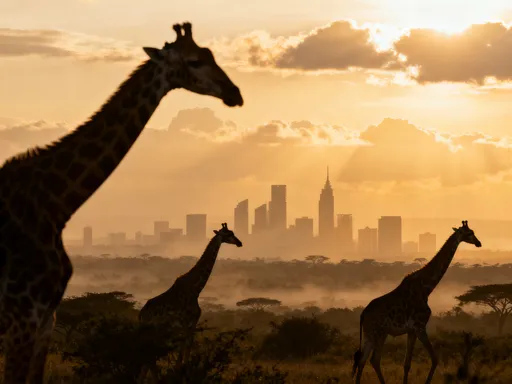
One of the most remarkable features of Nairobi is its namesake national park—an unfenced wilderness that shares an open border with the city. Spanning over 117 square kilometers, Nairobi National Park offers a rare opportunity to observe East Africa’s iconic wildlife in a setting unlike any other. Giraffes stroll across open grasslands with skyscrapers rising in the distance. Lions rest in the shade of acacia trees while airplanes glide overhead on approach to Jomo Kenyatta International Airport. This dramatic contrast between nature and modernity creates powerful visual narratives, making the park a favorite among photographers seeking both authenticity and artistic contrast.
The park is home to over 100 recorded species of mammals, including the endangered black rhinoceros, which is protected in a dedicated sanctuary within the reserve. Herds of wildebeest, zebra, and Thomson’s gazelle migrate seasonally across the plains, while predators such as leopards and spotted hyenas maintain the delicate balance of the ecosystem. Birdwatchers will also find it rewarding, with over 400 bird species documented, from the colorful lilac-breasted roller to the majestic martial eagle. Because the park is relatively small and well-managed, sightings are frequent and often close enough for detailed photography without disturbing the animals.
For the best experience, visitors are advised to enter through the main gate near Namanga Road early in the morning, ideally between 6:30 and 8:00 a.m. This timing ensures cooler temperatures, active wildlife, and soft, golden light perfect for capturing natural tones and textures. Late afternoon visits, from 4:00 to 6:00 p.m., offer warm, diffused light ideal for silhouette shots and long shadows that add depth to images. Unlike other parks, Nairobi National Park sees fewer tourists, which means less congestion and a more intimate experience. This makes it especially appealing for women traveling solo or in small groups who value peace and safety.
When photographing here, a zoom lens with a range of 70–300mm is highly recommended to capture distant animals without encroaching on their space. A polarizing filter helps reduce glare on grass and animal coats, enhancing color saturation. Because the terrain is mostly open, wind can be a factor, so using a lightweight tripod or monopod adds stability. Most importantly, patience is key—waiting quietly in one spot often yields the most genuine moments, such as a mother rhino guiding her calf or a secretary bird stalking insects through the tall grass. These are the images that tell stories, not just showcase scenery.
The Magic of Karura Forest: Urban Jungle Escape
Tucked within the northern suburbs of Nairobi, Karura Forest is a 300-acre haven of indigenous trees, winding trails, and tranquil waterways. Once threatened by illegal development, this forest was saved through a powerful grassroots movement led by Nobel Peace Prize laureate Wangari Maathai and local environmental advocates. Today, it stands as a symbol of resilience and community action, offering a peaceful retreat for walkers, joggers, and nature lovers. For photographers, Karura presents a different kind of beauty—one defined by texture, light, and quiet intimacy rather than grand vistas.
The forest’s canopy, formed by native cedar, mugumo (fig), and croton trees, creates layers of green that filter sunlight in mesmerizing patterns. Early morning visits, especially between 6:00 and 8:00 a.m., offer the clearest air and the softest light, ideal for capturing dew-covered spiderwebs, birds flitting between branches, and reflections in the small waterfalls along the river trail. The sound of flowing water, chirping birds, and rustling leaves enhances the sense of being deep in the wild, despite being just a short drive from busy roads. This sensory richness translates beautifully into photographs that convey mood and atmosphere.
Visitors are encouraged to follow marked trails, which are well-maintained and safe. Guided walks are available on weekends and public holidays, led by trained volunteers who share insights about the forest’s ecology and history. Photography here benefits from a macro lens to capture intricate details—moss on bark, butterflies on flowers, or droplets on ferns. A wide-angle lens works well for framing entire tree trunks or creating depth in path-leading-to-forest compositions. Because the canopy limits light, using a slightly higher ISO (800–1600) and a steady hand or small tripod helps maintain image quality without flash, which could disturb wildlife.
Karura Forest is also a sanctuary for small mammals like bushbucks, monkeys, and mongooses, though they are shy and often heard before seen. Birdlife is abundant, with species such as the African crowned eagle, grey parrot, and olive pigeon making their home here. The forest’s conservation success story adds emotional depth to any photo essay—each image becomes part of a larger narrative about protection, renewal, and hope. For women who value purposeful travel, Karura offers a chance to connect not just with nature, but with the spirit of collective care that keeps such places alive.
Ngong Forest and Hills: Elevated Perspectives
Just southwest of Nairobi, near the edge of the Great Rift Valley, the Ngong Hills rise like a natural fortress, offering panoramic views that stretch across the savannah and into neighboring counties. The name “Ngong” comes from the Maasai word “enkong’u,” meaning “knives,” a reference to the peaks’ sharp, blade-like ridges. This area is a favorite among local photographers and hikers for its dramatic topography, ever-changing light, and spiritual aura. The forested lower slopes give way to open grasslands and rocky outcrops, creating diverse compositions for landscape photography.
A drive to the Ngong Hills takes about 45 minutes from central Nairobi, making it a perfect half-day excursion. The trailhead begins near the Oloolua Nature Trail, where a small visitor center provides maps and safety information. The hike itself ranges from moderate to challenging, depending on how far you go—most visitors aim for the fourth or fifth peak, which offer the best vantage points. Sunrise is widely considered the optimal time for photography, when mist rolls through the valleys and the first rays of sunlight paint the hills in warm amber and rose tones. The interplay of light and shadow across the undulating terrain creates a sense of movement, ideal for wide-angle and drone shots (where permitted).
Photographers should bring a tripod for long exposures during low light and a telephoto lens to isolate distant features like grazing antelope or wind turbines on the horizon. A polarizing filter enhances the contrast between sky and land, especially on clear days. Because the elevation increases significantly, temperatures can drop, so layered clothing is advisable. The trail is generally safe, but it’s recommended to hike in groups, especially for those unfamiliar with the terrain. Local guides are available and can enrich the experience with stories about the area’s cultural significance to the Maasai and Kikuyu communities.
The Ngong Hills also hold historical importance—they were a favorite retreat of Karen Blixen, the Danish author of *Out of Africa*, who lived on a coffee farm at the foot of the hills. Her former home is now a museum, and the surrounding landscape remains largely unchanged, offering a glimpse into colonial-era Kenya while still feeling deeply rooted in African identity. Capturing this blend of natural beauty and human history adds depth to any visual project. Whether you’re photographing a lone acacia tree silhouetted against the sky or a family walking along the ridge at dusk, the Ngong Hills invite contemplation and connection.
Lake Naivasha and Hell’s Gate: A Photographer’s Playground
About two hours’ drive from Nairobi lies a region rich with photographic opportunities: Lake Naivasha and Hell’s Gate National Park. While not within the city limits, these destinations are easily accessible for a day trip or weekend getaway, offering a dramatic shift in scenery from urban greenery to vast lakeshores and volcanic landscapes. Together, they form a dynamic duo for nature photographers seeking variety, movement, and scale.
Lake Naivasha, a freshwater lake surrounded by wetlands and acacia forests, is renowned for its birdlife. Over 400 species have been recorded here, including great white pelicans, African fish eagles, and pied kingfishers. Boat rides—available through licensed operators—allow for unique reflection shots, especially at sunrise when the water is calm and mist hovers above the surface. Hippos are commonly seen lounging in the shallows, their backs breaking the water like ancient boulders. Crocodiles occasionally bask on the banks, though they keep a respectful distance from boats. The nearby Crescent Island, a private sanctuary, allows guided walking safaris where giraffes, zebras, and antelopes roam freely in a peaceful, vehicle-free environment.
Adjacent to the lake, Hell’s Gate National Park stands out for its dramatic geology and accessibility. Unlike many parks, visitors are allowed to cycle, walk, and even jog through its canyons and gorges. This proximity to the landscape enables intimate photography—from close-ups of rock textures to action shots of cyclists navigating narrow paths between towering cliffs. The park’s Fischer’s Tower and Central Tower formations rise dramatically from the plains, creating strong vertical lines that contrast with the horizontal sweep of the valley. Steam vents and hot springs hint at the geothermal activity beneath, adding an otherworldly element to the scenery.
For photographers, Hell’s Gate offers unmatched freedom. The absence of vehicle barriers means quieter, more personal encounters with nature. A telephoto lens captures distant raptors soaring above the gorges, while a wide-angle lens emphasizes the scale of the cliffs and open skies. Early morning visits provide soft light and active wildlife, while late afternoon brings warm hues and long shadows perfect for landscape compositions. Because the park is relatively small and well-marked, navigation is straightforward, making it ideal for women traveling independently or in small groups. The combination of natural drama, accessibility, and photographic diversity makes this area a must-visit for anyone seeking to expand their visual storytelling.
Capturing the Light: When and How to Shoot
Successful nature photography in and around Nairobi depends heavily on timing and technique. The region’s equatorial location means daylight hours are consistent year-round, with sunrise around 6:00 a.m. and sunset near 6:30 p.m. The golden hours—shortly after sunrise and before sunset—are universally regarded as the best times for shooting, when the sun is low, light is soft, and colors are rich. During these windows, shadows are long and directional, adding depth and dimension to images. Midday light, by contrast, is harsh and flat, often washing out details, so it’s best to rest, review photos, or explore shaded areas like forests during this time.
Weather patterns also play a crucial role. Nairobi has two rainy seasons: the long rains from March to May and the short rains from October to December. While rain can disrupt plans, it also brings lush greenery, dramatic clouds, and fresh reflections—ideal for moody, atmospheric shots. The dry months, particularly June to September and January to February, offer clearer skies and better visibility, making them optimal for long-distance wildlife photography. However, vegetation is sparser, so animals are easier to spot but backgrounds may appear dusty or brown.
Camera settings should be adjusted according to lighting conditions. In low light, use a wider aperture (f/4–f/5.6), higher ISO (800–1600), and slower shutter speed, ideally supported by a tripod. For fast-moving subjects like birds in flight or galloping zebras, switch to shutter priority mode with a speed of 1/1000 second or faster. When photographing scenes with high contrast—such as dark animals against bright skies—consider using exposure compensation or shooting in RAW format to retain detail in post-processing. A circular polarizing filter reduces glare on water and foliage, enhancing color and clarity.
Mobile apps like PhotoPills or Sun Surveyor help track sun position, moon phases, and golden hour times, allowing for precise planning. Even with basic gear, thoughtful composition—using the rule of thirds, leading lines, or natural frames—can elevate a photo from ordinary to extraordinary. The key is not having the most expensive equipment, but understanding light, patience, and respect for the environment. These principles ensure that every image captures not just a moment, but a feeling.
Responsible Photography in Natural Spaces
As photography becomes more popular in natural areas, the responsibility to protect these spaces grows. Ethical practices ensure that the beauty we capture today remains intact for future generations. The first rule is to maintain a safe and respectful distance from wildlife. Approaching too closely causes stress to animals and can provoke defensive behavior. Use zoom lenses rather than stepping off trails or closing in for a better shot. Never feed or call out to animals, as this alters their natural behavior and creates dependency.
Staying on marked trails is essential, especially in fragile ecosystems like Karura Forest or the slopes of Ngong Hills. Trampling vegetation or creating new paths leads to soil erosion and habitat loss. In parks like Hell’s Gate and Nairobi National Park, follow all posted guidelines and obey ranger instructions. Avoid using drones unless explicitly permitted, as their noise can disturb birds and other wildlife. If sharing photos online, refrain from geotagging sensitive locations that could attract large crowds or illegal activity.
Photography can be a powerful tool for conservation. By sharing images that highlight the beauty and vulnerability of these places, you contribute to awareness and appreciation. Many local organizations welcome photo donations for educational campaigns or fundraising. Some photographers collaborate with eco-lodges or tour operators to promote sustainable tourism. When you frame a photo, remember that you’re not just capturing a scene—you’re advocating for its preservation.
For women who value care, connection, and purpose, responsible photography aligns perfectly with a mindful approach to travel. It’s not about getting the perfect shot at any cost, but about honoring the place, its people, and its creatures. Each click of the shutter becomes an act of respect, a quiet promise to protect what we love.
Nairobi’s natural landscapes challenge expectations and reward the curious eye. From misty forests to open plains, every frame tells a story of harmony between city and wild. With thoughtful planning and respect for nature, your lens can capture not just beauty—but balance. Grab your camera, step outside the city rush, and let Nairobi surprise you.