How I Retrained My Brain to Quiet Anxiety—A Science-Backed Journey
Anxiety doesn’t define you—but learning to manage it can transform your life. I know because I’ve been there. What felt like constant mental noise slowly eased not through quick fixes, but through consistent, evidence-based rehabilitation techniques. This isn’t about curing anxiety; it’s about rewiring your response to it. In this article, I’ll walk you through the proven strategies that helped me regain control, explained clearly and practically, so you can begin your own path toward lasting calm. These are not miracle cures or trendy wellness hacks, but methods grounded in neuroscience and clinical psychology, accessible to anyone willing to practice them with patience and care. The journey of anxiety rehabilitation is not about perfection, but about progress.
The Hidden Cost of Chronic Anxiety
Anxiety is more than occasional worry. For many, it becomes a persistent undercurrent that colors daily life, affecting focus, energy, relationships, and even physical health. When anxiety becomes chronic, it stops being a reaction to stress and starts functioning like a default setting in the brain. Simple tasks like answering emails, making phone calls, or attending family gatherings can trigger disproportionate responses—racing thoughts, tightness in the chest, or an overwhelming urge to withdraw. Over time, these responses erode confidence and shrink one’s world.
The impact of chronic anxiety extends beyond emotional discomfort. Research has linked prolonged stress activation to increased inflammation, weakened immune function, digestive issues, and disrupted sleep patterns. The body, designed to respond to short-term threats, suffers when the “fight-or-flight” system remains switched on for weeks or months. This physiological strain often goes unnoticed until it manifests in fatigue, headaches, or recurring illness. Meanwhile, mental clarity diminishes. The brain’s prefrontal cortex, responsible for decision-making and focus, becomes less effective under constant stress, making it harder to plan, organize, or think creatively.
Equally damaging are the behavioral consequences. People with chronic anxiety may begin avoiding situations that trigger discomfort—declining invitations, procrastinating on important tasks, or over-preparing to manage uncertainty. While these behaviors provide short-term relief, they reinforce the brain’s belief that the world is unsafe. Over time, avoidance becomes a habit, limiting personal and professional growth. A mother might stop attending her child’s school events due to social unease. A professional might turn down promotions to avoid public speaking. These choices, made to preserve comfort, gradually narrow life’s possibilities.
The true cost of anxiety is not just in the moments of panic or worry, but in the accumulation of missed experiences, unspoken words, and unrealized potential. It’s the quiet erosion of joy, spontaneity, and connection. Recognizing this hidden toll is the first step toward change. Acknowledging that anxiety affects more than feelings—that it shapes behavior, health, and identity—creates the motivation to seek lasting solutions, not temporary escapes.
Why Traditional Coping Often Falls Short
Most people try to manage anxiety with familiar coping strategies: distraction, reassurance-seeking, or avoidance. Watching television to quiet the mind, checking the weather repeatedly before a trip, or skipping a social event to prevent discomfort—these responses are common and understandable. In the moment, they work. They reduce the intensity of anxiety, offering a brief sense of relief. But over time, these strategies backfire. They do not teach the brain that the feared situation is safe; instead, they confirm the belief that anxiety must be avoided at all costs.
Psychologists refer to these patterns as maladaptive coping mechanisms. Unlike adaptive strategies that build long-term resilience, maladaptive ones maintain the cycle of fear. For example, someone anxious about health might frequently search symptoms online. Each search provides temporary reassurance, but the next wave of worry returns stronger, requiring more checking. The behavior becomes compulsive, not because it helps, but because the brain has learned to rely on it as a safety ritual. The problem isn’t the anxiety itself, but the way it is managed. Without interrupting these patterns, anxiety remains unchallenged and unchanging.
Another common but ineffective approach is suppression—trying to push anxious thoughts away or pretending they don’t exist. While this may seem like strength, research shows that thought suppression often increases mental preoccupation. The more one tries not to think about something, the more it returns, a phenomenon known as the “white bear effect.” A woman trying not to worry about her daughter’s safety might find the thoughts intruding more frequently, especially at night. This creates a sense of losing control, which in turn heightens anxiety.
The alternative is not to eliminate anxiety, but to change the relationship with it. Just as physical rehabilitation after an injury involves gradual strengthening and retraining, anxiety recovery requires deliberate practice. Instead of avoiding discomfort, the goal becomes building tolerance for uncertainty and learning to respond differently. This shift doesn’t happen overnight, but with consistent effort, the brain can learn new responses. The key is replacing short-term fixes with long-term training. This is not about willpower, but about rewiring habitual patterns through repetition and evidence-based techniques.
Understanding Neuroplasticity: Your Brain’s Ability to Change
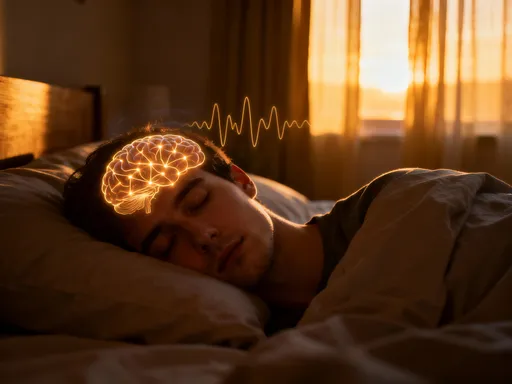
For decades, scientists believed the adult brain was fixed—that its structure and function could not change significantly after childhood. Today, we know this is not true. The brain possesses a remarkable quality called neuroplasticity: the ability to reorganize itself by forming new neural connections throughout life. This means that even deeply ingrained patterns, such as chronic anxiety, are not permanent. With the right stimuli and repeated practice, the brain can develop new pathways that support calm, clarity, and resilience.
Neuroplasticity works through a simple principle: “neurons that fire together, wire together.” When a thought, behavior, or emotion is repeated, the brain strengthens the connections associated with it. This is how habits form. In anxiety, repeated worry strengthens fear-based circuits, making them faster and more automatic. But the same mechanism can be used in reverse. When a person practices calm responses—such as mindful breathing, rational self-talk, or gradual exposure to feared situations—the brain begins to build alternative pathways. Over time, these new circuits become more dominant, reducing the power of old, anxious patterns.
This process is not abstract or theoretical. Brain imaging studies have shown measurable changes in individuals who undergo cognitive behavioral therapy or mindfulness training. The amygdala, the brain’s alarm center, shows reduced activity, while the prefrontal cortex, responsible for regulation and reasoning, becomes more engaged. These changes correlate with reduced anxiety symptoms and improved emotional control. What is remarkable is that these shifts occur regardless of age. A 35-year-old parent or a 52-year-old professional can retrain their brain just as effectively as a younger person. Growth is possible at every stage of life.
Neuroplasticity offers more than scientific insight—it offers hope. Anxiety is not a life sentence. It is a pattern, not a personality trait. Just as someone can learn to play the piano or speak a new language through practice, they can learn to respond to stress with greater balance. The journey requires consistency, not perfection. Each time a person chooses to face a worry rather than avoid it, or to observe a thought without reacting, they are strengthening new neural pathways. These small moments of practice accumulate, leading to lasting change. The brain is not static; it is responsive, adaptable, and capable of transformation.
Core Components of Anxiety Rehabilitation Training
Effective anxiety rehabilitation is not a single technique, but a structured approach combining several evidence-based components. These include cognitive restructuring, exposure techniques, mindful awareness, and behavioral activation. Together, they form a comprehensive framework for retraining the brain. Each element addresses a different aspect of anxiety, working in synergy to build resilience over time. The power lies not in intensity, but in regular, deliberate practice.
Cognitive restructuring involves identifying and challenging distorted thoughts that fuel anxiety. Many anxious thoughts follow predictable patterns: catastrophizing (“If I make a mistake, I’ll lose my job”), overgeneralization (“I felt awkward once, so I always do”), or mind-reading (“They think I’m boring”). These thoughts feel true in the moment, but they are not facts. Cognitive restructuring teaches individuals to examine the evidence, consider alternative explanations, and develop balanced perspectives. For example, instead of “I can’t handle this,” a more realistic thought might be “This is challenging, but I’ve handled difficult situations before.” Writing down thoughts in a journal and questioning their accuracy can make this process concrete and effective.
Exposure techniques are another cornerstone of anxiety rehabilitation. Avoidance keeps anxiety alive; exposure weakens it. Gradual, controlled exposure to feared situations helps the brain learn that the anticipated danger is unlikely to occur. For someone afraid of driving, this might start with sitting in the car for five minutes, then driving around the block, then taking a short highway trip. The key is to stay in the situation long enough for anxiety to naturally decrease, teaching the brain that discomfort is temporary and manageable. This process, called habituation, reduces the fear response over time. Exposure is not about enduring panic, but about building confidence through repeated, manageable challenges.
Mindful awareness trains attention to stay in the present moment without judgment. Anxiety often involves rumination about the past or worry about the future. Mindfulness interrupts this cycle by anchoring awareness in the here and now—the breath, bodily sensations, or sounds in the environment. This does not eliminate thoughts, but creates space between the person and their thoughts. A woman noticing her heart racing before a meeting can observe, “I’m having the thought that I’ll fail,” rather than becoming fused with it. Regular mindfulness practice, even for a few minutes a day, has been shown to reduce anxiety symptoms and improve emotional regulation.
Behavioral activation addresses the tendency to withdraw when anxious. When people reduce activity, they lose opportunities for positive reinforcement and mastery. Behavioral activation involves scheduling meaningful or enjoyable activities, even when motivation is low. This could be a walk in the park, calling a friend, or organizing a drawer. These actions break the cycle of inertia and provide evidence that one can take action despite discomfort. Over time, increased engagement leads to improved mood and reduced anxiety. Together, these four components form a powerful, science-backed system for change.
Building a Daily Practice That Fits Real Life
One of the biggest obstacles to anxiety rehabilitation is the belief that it requires large blocks of time or perfect conditions. In reality, the most effective practices are small, consistent actions integrated into daily routines. The goal is not to add more stress to an already full schedule, but to weave in micro-moments of training that accumulate over time. Just as brushing teeth prevents dental problems, daily mental hygiene can prevent anxiety from escalating.
Start with mindfulness. Five minutes of focused breathing each morning can set a calmer tone for the day. Sit in a chair, close the eyes, and pay attention to the breath. When the mind wanders—and it will—gently return to the breath without judgment. This simple act strengthens the brain’s ability to regulate attention and emotion. It can be done before getting out of bed, during a lunch break, or after dropping the kids at school. Consistency matters more than duration.
Journals are another practical tool. Keeping a notebook to record one anxious thought per day and applying cognitive restructuring can yield significant insights over time. The act of writing slows down automatic thinking and creates space for reflection. Over weeks, patterns emerge—recurring fears, common triggers, or progress in responding differently. This record becomes a personal map of growth.
Behavioral activation can be built into existing routines. Instead of waiting for motivation, schedule one small activity each day that brings a sense of accomplishment or pleasure. It might be watering plants, listening to a favorite song, or preparing a healthy meal. The activity doesn’t need to be exciting—just intentional. Over time, these moments build momentum, counteracting the inertia that often accompanies anxiety.
The key is sustainability. A 30-minute meditation session may feel overwhelming, but one minute of mindful breathing is doable. A full cognitive restructuring worksheet may seem daunting, but questioning one thought is manageable. By starting small, people avoid burnout and build confidence. Progress is not measured by intensity, but by consistency. Like physical exercise, mental training works through repetition. Over months, these small practices rewire the brain, leading to lasting change.
Tracking Progress and Navigating Setbacks
Recovery from anxiety is rarely linear. There will be days of clarity and days when old patterns return. This is normal. The brain resists change, especially when it has relied on anxiety-based habits for years. Setbacks are not failures; they are part of the process. What matters is not the absence of setbacks, but the ability to respond to them with self-compassion and persistence.
Tracking progress helps maintain motivation. Since changes are often subtle, they can go unnoticed without reflection. Keep a simple log of weekly observations: How long did anxiety last after a stressful event? Was it easier to return to calm? Did a situation that once felt overwhelming feel more manageable? These small shifts indicate improvement, even if the overall feeling of anxiety persists. A woman who used to avoid grocery stores might now enter one, stay for ten minutes, and leave without panic. That is progress, even if she doesn’t yet shop for a full hour.
When motivation dips, it helps to reconnect with the reasons for change. Was it to enjoy time with family without distraction? To feel confident at work? To sleep through the night? Revisiting these personal values strengthens commitment. It also helps to remember that rehabilitation is not about achieving a state of constant calm, but about building the ability to navigate discomfort with greater ease.
Self-compassion is essential. Many people respond to setbacks with self-criticism: “I should be over this by now.” But research shows that self-compassion leads to greater resilience. Treating oneself with kindness, as one would a friend, reduces shame and increases the likelihood of trying again. A slip-up does not erase progress. Each time a person returns to practice after a break, they reinforce the new neural pathways. The journey is not about perfection, but about persistence.
When and How to Seek Professional Support
While self-directed practice is powerful, professional support can accelerate and deepen the recovery process. Just as a physical therapist guides rehabilitation after an injury, a mental health professional can provide structure, accountability, and expertise in anxiety treatment. This is not a sign of weakness, but a wise use of available resources. Seeking help reflects strength and commitment to well-being.
Cognitive behavioral therapy (CBT) is one of the most effective treatments for anxiety, supported by decades of research. A trained therapist helps individuals identify unhelpful thought patterns, design exposure exercises, and develop coping strategies tailored to their life. Therapy provides a safe space to explore fears and practice new responses with guidance. It also helps prevent common pitfalls, such as moving too quickly in exposure or misapplying cognitive techniques.
Other evidence-based approaches include acceptance and commitment therapy (ACT), mindfulness-based stress reduction (MBSR), and dialectical behavior therapy (DBT) skills. These modalities offer additional tools for managing difficult emotions and increasing psychological flexibility. A therapist can help determine which approach aligns best with an individual’s needs and goals.
Finding the right professional may take time. Look for licensed therapists with experience in anxiety disorders. Many offer initial consultations to assess fit. Online therapy platforms have also made access easier, especially for those with busy schedules or limited local options. The important thing is to start. Even a few sessions can provide valuable insights and direction. Professional support does not replace personal effort, but enhances it, much like a coach helps an athlete train more effectively.
Conclusion
Anxiety may never disappear completely, but with the right tools, it no longer has to call the shots. Rehabilitation isn’t about elimination—it’s about empowerment. By applying structured, science-backed practices consistently, you can retrain your brain to respond differently, regain emotional balance, and live with greater freedom. The journey takes time, but every small step builds toward lasting resilience. This is not a quick fix, but a lifelong investment in well-being. You are not broken. You are learning. And with patience, practice, and support, you can create a life where anxiety no longer limits what is possible.